Moses Rifkin
The Captain and Ann BarbaraMoses Rifkin enters Mary Antin's memoir as the young man who is to marry her elder sister, Frieda, and he is introduced with an affection that marks him as one of the most warmly drawn figures in the book. Mary declares him "the nicest young man of my acquaintance, not at all like other workmen," a judgment that sets him apart from the ordinary laboring class of the immigrant world. His character is established through his behavior rather than his appearance: he is kind to the Antin children, bringing them presents and taking them out for excursions, and he possesses a sense of humor that makes him delightful company. That he is going to marry Frieda is, for Mary, reason enough to be pleased with him, and her fondness for him is genuine and unforced. Moses is thus introduced not as a rival for affection but as an addition to the family circle, a man whose virtues are immediately visible to the narrator's admiring eyes.
Courtship and the Wooing Touch
The courtship of Moses and Frieda unfolds against the backdrop of Frieda's continued labor in the dressmaker's shop, where she remains even after her engagement is announced. The marriage is not to take place for some time, and in the interval Frieda keeps working and bringing home all her wages, determined not to let her family feel her departure sooner than necessary. It is early summer, and the air has "a wooing touch, even on Wheeler Street," a phrase that gently suggests the romantic atmosphere surrounding the couple. Moses comes to call, and Mary supposes he also has a wooing touch, but Frieda only smiles and shakes her head, her mouth full of pins, making it physically impossible for Moses to argue with her. The scene is rendered with tender comedy: Frieda remains all evening in "a white disorder of tucked breadths, curled ruffles, dismembered sleeves, and swirls of fresh lace," her needle glancing in the lamplight while poor Moses picks up her spools. The image of the patient suitor gathering spools while his betrothed sews is one of the most charming domestic vignettes in the memoir, capturing both the sweetness of their courtship and the relentless industry of Frieda's character.
The Trousseau That Was Not a Trousseau
The most revealing episode involving Moses is the one in which Frieda suddenly turns spendthrift, appropriating fabulous sums to spend just as she pleases for once. She attends bargain sales and brings away finery such as had never graced the family's flat before, then shuts herself up in the parlor each evening to cut and snip and measure and baste and stitch as if there were nothing else in the world to do. Moses comes to visit, but Frieda will not be distracted from her work. The reader, and Mary herself, naturally assumes that Frieda is preparing her trousseau for her approaching wedding. But the revelation, when it comes, is a quiet shock: the dress on which she is so intent is not her trousseau at all, but Mary's graduation dress. When it is finished and pronounced most beautiful, Frieda goes to the shops once more and buys the sash with the silk fringes that Mary wears on Graduation Day. Moses is thus present at the margins of a scene that is really about Frieda's selfless devotion to her younger sister, and his role in it is to be the patient, uncomplaining witness to Frieda's sacrifice. The episode deepens the reader's sense of Moses as a man who accepts Frieda's priorities without resentment, even as it underscores the poignancy of Frieda's own postponed desires.
Marriage and Domestic Life in East Boston
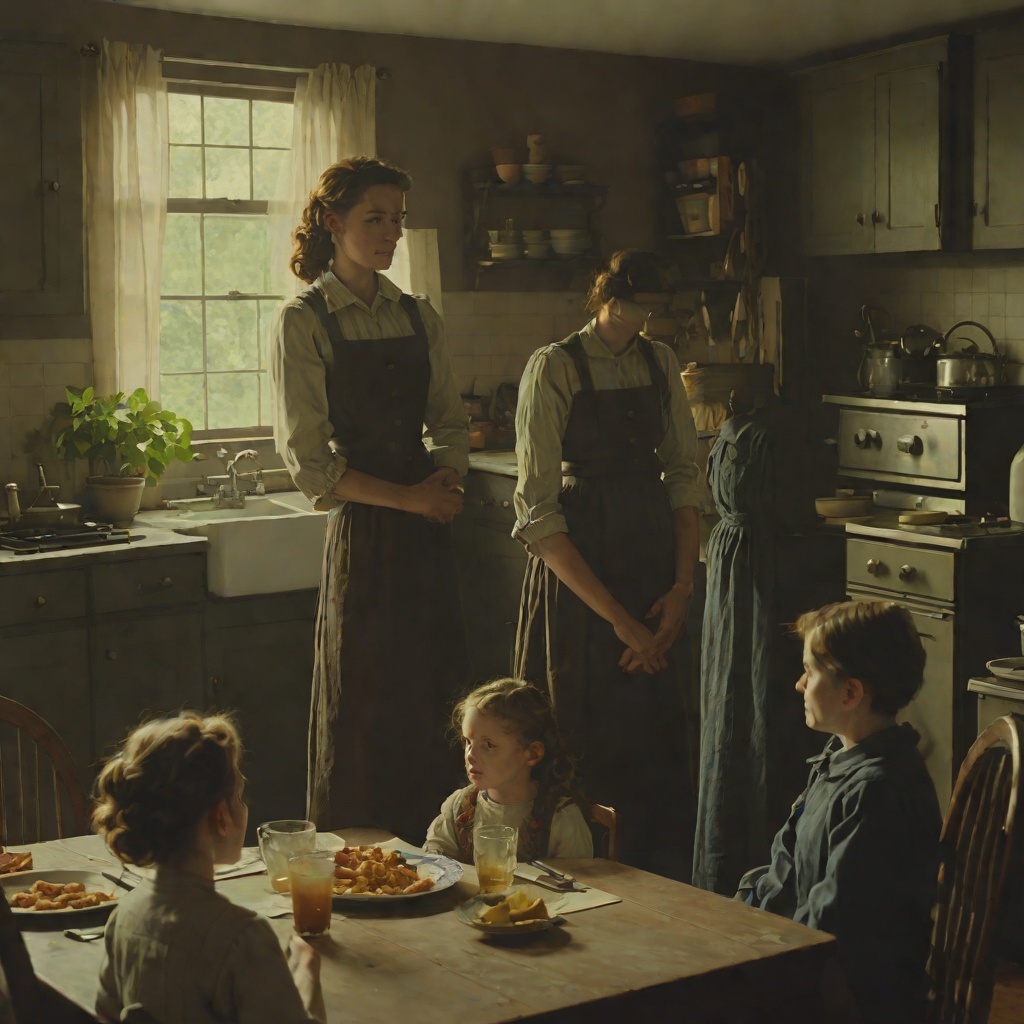
After the marriage, Moses appears in the memoir as the head of a household in East Boston, where Mary spends some of the happiest days of that happy time with her sister. The domestic scene is rendered with loving specificity: the family has a merry time at supper, with Moses making clever jokes without cracking a smile himself, and the baby romping in his high chair, eating what isn't good for him. The best of the evening comes later, when father and baby have gone to bed and the dishes are put away, and there is not a crumb left on the red-and-white checked tablecloth. Frieda takes out her sewing, Mary takes a book, and the lamp is between them, shining on the table, on the large brown roses on the wall, on the green and brown diamonds of the oilcloth on the floor, on the baby's rattle on a shelf, and on the shining stove in the corner. Moses, notably, is absent from this intimate scene of sisterly reading, having presumably gone to bed with the baby, and his absence allows the kitchen to become a space of pure female companionship. Yet the household he has established is the precondition for that happiness, and Mary notes that Frieda has a beautiful parlor with plush chairs and a velvet carpet and gilt picture frames, even though the sisters prefer the homely, homelike kitchen. Moses has provided his wife with material comfort, but the memoir's emphasis falls on the warmth of the kitchen rather than the grandeur of the parlor, suggesting that the true wealth of the household lies in its affection rather than its furnishings.
The Old-World Fate and the American Promise
Moses Rifkin's significance in the memoir extends beyond his personal charm, for his marriage to Frieda is the central instance of the book's meditation on the difference between Old-World and American destinies for women. Mary reflects that Frieda came to America too late to avail herself of the gifts of an American girlhood; had she been two years younger, she might have dodged her circumstances and evaded her Old-World fate. She would have gone to school and imbibed American ideas, might have clung to her girlhood longer instead of marrying at seventeen. Mary is so fond of the American way that it has always seemed to her a pitiful accident that her sister should have come so near and missed by so little the fulfilment of her country's promise to women, which Mary defines as a long girlhood, a free choice in marriage, and a brimful womanhood. Moses is not blamed for this state of affairs; he is described as a good workman earning fair wages, of irreproachable character and refined manners, and Mary's father has known him for years. The marriage is presented as a reasonable and even generous act on the father's part, a release of Frieda from the workshop that is really a sacrifice, since he is still in the woods financially and will sorely miss her wages. Yet the narrative cannot help regretting that no one counseled the father to give America more time with his daughter, for Frieda attended night school and was fond of reading, and in books and slowly ripening experience she might have found a better answer to the riddle of a girl's life than a premature marriage. Moses thus stands at the center of the book's most ambivalent judgment: he is a good man and a kind husband, and yet his marriage to Frieda represents the closing of a door that American freedom had briefly opened.
Narrative Role and Evaluation
Within the structure of the memoir, Moses Rifkin functions as a supporting figure whose goodness throws into relief the narrator's own self-criticism and the family's complex dynamics. Mary's fondness for him is part of her larger acknowledgment of Frieda's devotion, for she recalls with shame that she accepted the arrangements made for her sister without much reflection, taking everything planned for her advantage as a matter of course. Frieda was relied upon for help, and her sister for glory, and Moses enters this economy of sacrifice as the man who will take Frieda out of it. His kindness to the children, his humor, and his patient courtship all mark him as a worthy recipient of Frieda's love, and Mary's pleasure in the engagement is genuine. Yet the memoir also uses Moses to measure what Frieda gave up, and the reader is left with the sense that his marriage, however happy, was purchased at the cost of Frieda's American girlhood. Moses himself remains a somewhat flat figure, defined by his virtues rather than his inner life, but this flatness is appropriate to his role: he is the good fortune that Frieda deserved, and the good man who could not quite compensate for what America had promised and withheld.